Newborn Health Essentials 2026: Thermometers, Nail Files, and Tiny Baby Care Tools
Newborn health essentials are the small home-care tools that help with everyday grooming, temperature checks, stuffy noses, and basic baby care. They are not a replacement for a pediatrician. For a newborn, the most useful setup is a simple kit you can find quickly, plus a clear rule for when to stop troubleshooting at home and call for medical advice.
This guide fits inside our larger Newborn Essentials hub. Sleep, feeding, diapering, bath, and clothing all matter, but health tools need a slightly different mindset: buy practical basics, learn where they live, and keep medical decisions with your baby’s clinician.
If your baby was premature, has a medical condition, or came home with special instructions, use your discharge paperwork and pediatrician’s guidance first. Our Newborn essentials for preemie guide can help with the larger setup, but it should not override your care team.
What Newborn Health Essentials Should You Have at Home?
The most useful newborn health essentials are a digital thermometer, baby nail file or baby nail clippers, nasal aspirator or bulb syringe, saline drops if recommended by your pediatrician, soft brush or comb, and a small case or caddy to keep everything together.
Keep these tools for everyday care only. For fever, breathing concerns, poor feeding, dehydration signs, unusual sleepiness, or anything that feels urgent, call your pediatrician instead of relying on a product.
Newborn care note
HealthyChildren.org says babies 3 months or younger with a rectal temperature of 100.4 degrees F (38 degrees C) or higher need an immediate call to the pediatrician. Keep a thermometer ready, but do not use this guide to diagnose or treat illness.
Newborn Health Essentials: Buy First, Wait, or Ask the Doctor
Newborn health tools should be boring in the best way. You want them clean, organized, and easy to reach at 2 a.m. You do not need a drawer full of gadgets that promise to solve medical problems. Start with tools for measuring, grooming, clearing small everyday congestion, and keeping items together.
| Item | Buy Before Baby Arrives? | Use It For |
|---|---|---|
| Digital thermometer | Yes | Checking temperature when baby seems sick. |
| Baby nail file or baby nail clippers | Yes | Keeping tiny nails from scratching baby’s face. |
| Nasal aspirator or bulb syringe | Yes | Helping clear mucus when used as directed. |
| Soft brush or comb | Optional but useful | Gentle grooming after bath or during daily care. |
| Medicine dispenser | Ask first | Only for medicine your pediatrician tells you to give. |
| Extra medical gadgets | Wait | Often unnecessary unless your clinician recommends them. |
After you choose these basics, return to the main Newborn Essentials list so health tools stay balanced with bath supplies, clean clothes, diapers, and feeding gear.
Quick Shop
Newborn Care Tool to Keep Together
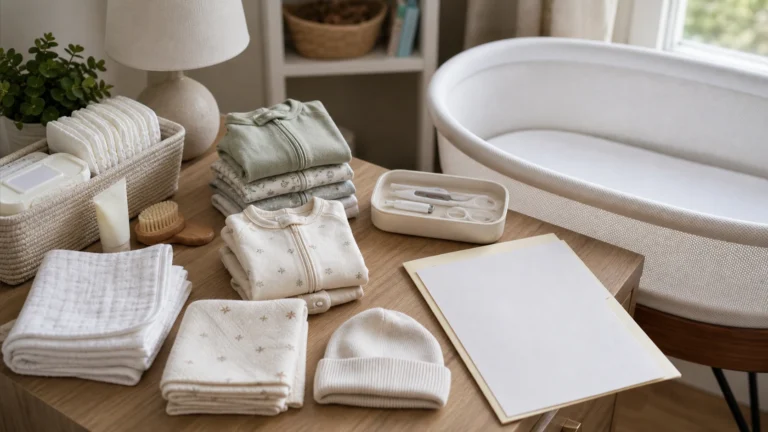
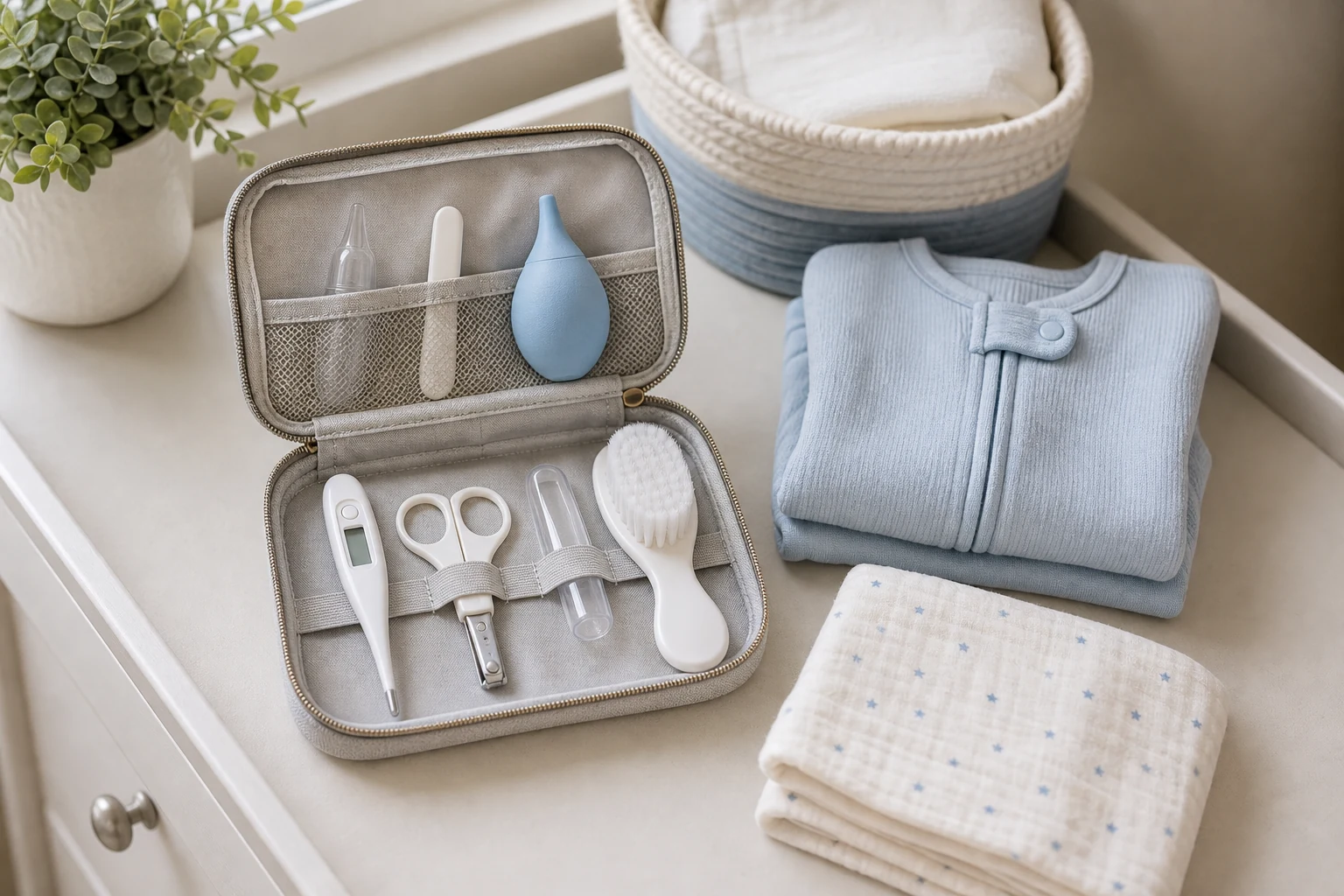
A basic healthcare and grooming kit can keep small newborn care tools in one place so you are not searching through drawers during a late-night check.
A Baby Healthcare Kit Keeps Small Tools Together
A baby healthcare kit is useful because newborn care tools are small and easy to misplace. The Safety 1st kit in this guide includes grooming and care items such as a nasal aspirator, soft brush and comb, nail clippers, digital thermometer, probe covers, medicine dispenser, and an organizing case, according to the product data.
That does not mean every item should be used without guidance. A thermometer helps you know when to call. A medicine dispenser should only be used for medicine your pediatrician has told you to give. A nasal aspirator can help with mucus, but breathing trouble or feeding trouble should be a call, not a gadget problem.
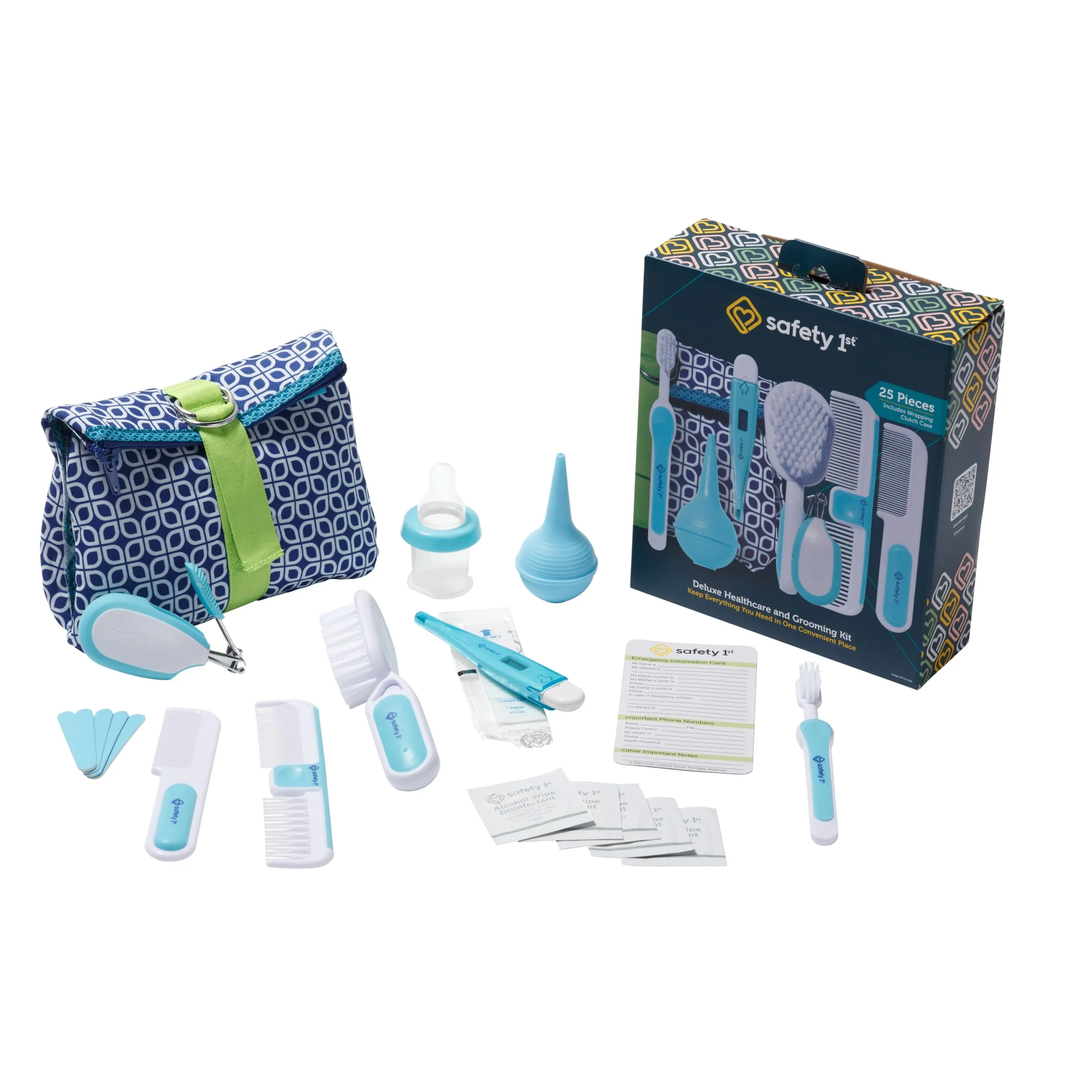
Baby Healthcare Kit
A basic kit for keeping small newborn grooming and care tools in one place.
Check Price on AmazonThermometer Rules Matter Most
A thermometer is one of the most important newborn health essentials because it tells you whether a number needs action. HealthyChildren.org explains that a rectal reading is the most reliable for infants, especially babies under 3 months, and that a rectal temperature of 100.4 degrees F or higher in a baby 3 months or younger needs an immediate call to the pediatrician.
Ask your pediatrician which thermometer type and method they want you to use at home. If you call about a temperature, tell them your baby’s age, the number, how you took it, and what symptoms you are seeing. Do not give fever medicine to a newborn unless your pediatrician specifically tells you to.
Nail Files, Clippers, and Tiny Scratches
Newborn nails can be surprisingly sharp. A baby nail file, baby nail scissors, or baby nail clippers can help keep scratches down, but the tool matters less than patience and good lighting. MedlinePlus notes that newborn nails are often soft and flexible, and that parents can file them or trim carefully with baby nail tools.
Many parents find nail care easier when baby is calm, sleepy, or freshly bathed. If you feel nervous, start with a soft file instead of clipping. Keep nail tools in the same health kit every time so they do not end up mixed with diaper cream, laundry items, or older kids’ craft supplies.
Nasal Care Should Stay Gentle
A nasal aspirator or bulb syringe can be useful when a newborn has a stuffy nose. HealthyChildren.org’s cold-care guidance describes saline drops or spray and careful bulb syringe use for clearing congestion. The key word is careful. Too much suction can irritate tiny noses, and congestion that affects feeding, breathing, or sleep should be discussed with your pediatrician.
Keep nasal care tools clean and let them dry between uses. If your baby is working hard to breathe, has blue lips, is not feeding well, has fewer wet diapers, or seems unusually sleepy, treat that as a medical concern instead of trying one more tool.
Health Tools Work Better With Bath and Clothing Basics
Newborn care routines overlap. Nail filing may be easier after a warm bath. A soft brush may live near bath towels. Clean sleepers and bodysuits help after spit-up, diaper leaks, or a quick rinse. That is why this guide belongs next to Newborn bath essentials and Newborn clothing essentials, not in a separate medicine-only drawer.
Still, keep health tools clean and separate from wet bath items. A damp washcloth and a thermometer do not belong in the same closed pouch. Let bath supplies dry, keep clothing backups nearby, and store health tools in a dry, predictable spot.
Where to Store Newborn Health Essentials
Health tools should be easy for adults to find and hard for children to reach. If your home has more than one floor, you do not need two full kits. You may want one main kit plus a thermometer location that every caregiver knows. For a multi-level setup, use Newborn essentials for upstairs downstairs to decide what needs a duplicate and what only needs a home base.
Storage matters more as siblings get involved. Do not mix tiny nail tools, probe covers, medicine dispensers, or nasal pieces with older-child toys, sensory bins, or craft supplies. If your home also has play zones or arts-and-crafts items, keep them separate from newborn care; a toy review like our Play-Doh Kitchen Creations review belongs in a totally different family organization zone.
If space is tight, our Newborn essentials storage ideas guide can help keep health tools, diaper supplies, bath items, and clothing backups from blending into one messy basket.
Special Situations Need Pediatrician Guidance
Some newborns need a more specific care plan. Preemies, babies with feeding concerns, babies with healing skin, and babies with breathing or heart conditions may need tools or instructions that are different from a standard registry list. Use your pediatrician’s guidance first, then build your Newborn Essentials setup around that plan.
If you are also choosing sleep layers for a smaller baby, a guide like swaddle for preemie baby may help with sizing questions, but health concerns still belong with your baby’s clinician.
Newborn Health Essentials FAQ
What newborn health essentials do I need before baby arrives?
Start with a digital thermometer, baby nail file or clippers, nasal aspirator or bulb syringe, soft brush or comb, and a small case or caddy to keep care tools together.
When should I call the pediatrician for a newborn fever?
HealthyChildren.org says to call immediately if a baby 3 months or younger has a rectal temperature of 100.4 degrees F (38 degrees C) or higher.
Do I need a full baby healthcare kit?
Not always, but a basic kit can be convenient because it keeps small grooming and care tools in one place. Check what is included before buying duplicate tools.
Can I use a nasal aspirator every time my baby sounds stuffy?
Use nasal suction gently and as directed. If congestion affects feeding, breathing, or sleep, or your baby seems very unwell, call your pediatrician.
What health products can wait?
You can usually wait on extra gadgets, duplicate thermometers, specialty monitors, and products that make medical promises unless your pediatrician recommends them.
Final Takeaway
The best newborn health essentials are simple, organized, and used with humility. A thermometer, nail tool, nasal care tool, brush or comb, and a small case can make everyday care easier, but they do not replace pediatric guidance.
Keep the kit where adults can find it, connect it back to your full Newborn Essentials setup, and remember the most important tool is knowing when to call your baby’s doctor.